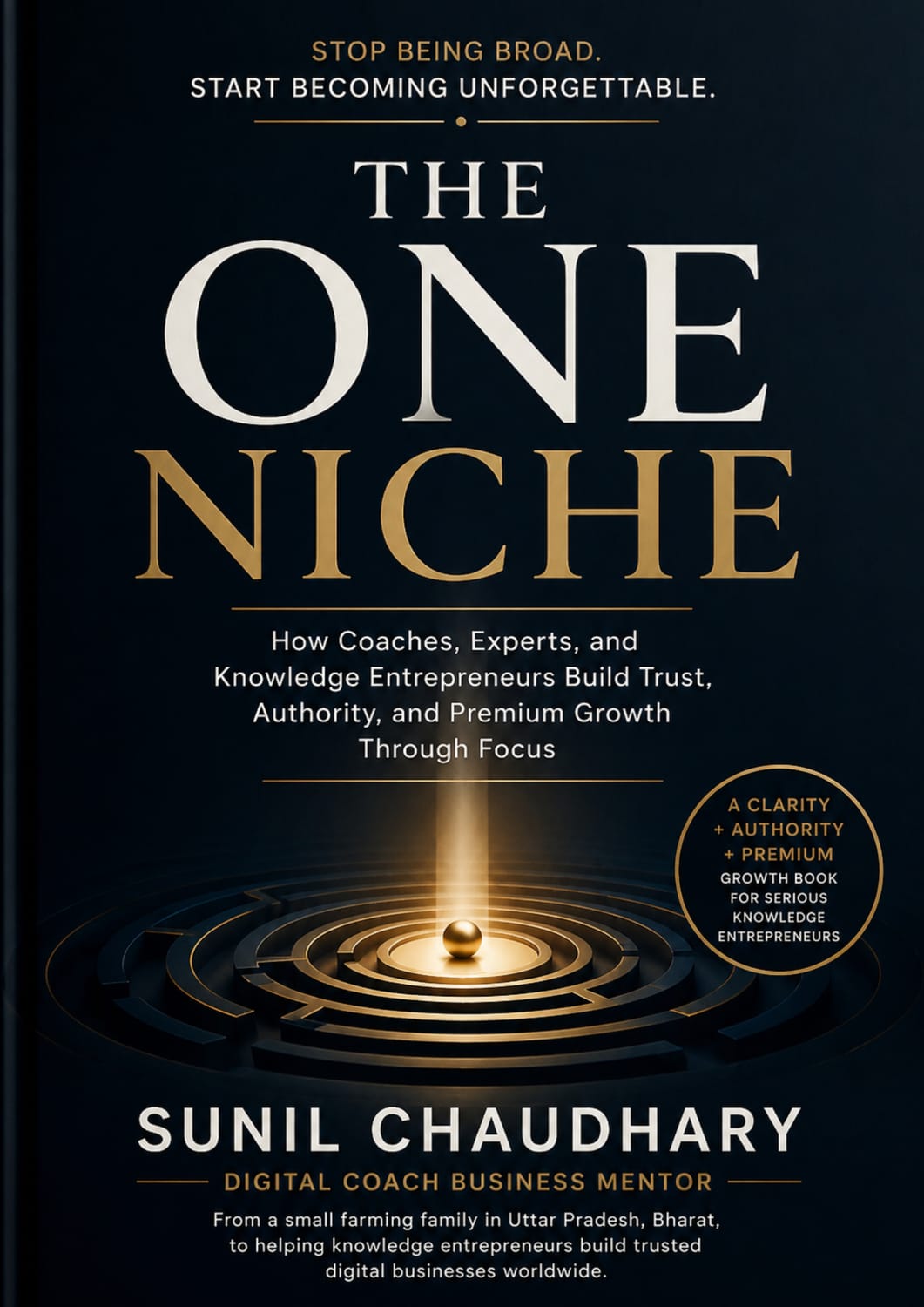
Digital Coach Business: From Learning to Real Implementation
Why Real Success Takes Time: 12 Powerful Lessons From 12 Years of Coaching and Building a Digital Coach Business
By Sunil Chaudhary — Digital Coach Business Implementation Mentor
There is something strange about experience.
The more you gain it, the more you realize how little you actually know.
I have been working as a coach since 2014. That is almost 12 years of coaching, teaching, experimenting, making mistakes, building businesses, working with students, working with communities, and learning from the market.
And even after all these years, I still feel that I am learning.
In fact, I have coaches who coach me.
That should tell you something.
A genuine coach does not stop learning.
A genuine mentor does not stop observing.
A genuine business builder does not stop improving.
But I often see something completely different happening with people who are new to coaching or digital business.
They learn something for two or three months.
They watch some videos.
They complete a few courses.
They get their first small result.
And suddenly, they feel:
"I know everything now."
That is where the real problem begins.
Because knowing something and being able to build a business around it are two completely different things.
I have learned this lesson again and again over the last 12 years. And today, I want to share it with you honestly.
Not as a textbook lesson.
Not as a motivational speech.
Just as one person talking to another person who wants to build something meaningful.
The More I Learn, the More I Realize I Need to Learn
When I started coaching, I thought learning meant collecting knowledge.
Over time, my understanding changed.
Learning is not only about adding information to your mind.
Learning is about observing.
Learning is about taking action.
Learning is about making mistakes.
Learning is about understanding people.
Learning is about adapting when the market changes.
Learning is about seeing what works in the real world.
This is one reason I believe experience is one of the most important assets of a coach.
A coach who stays close to people starts noticing patterns.
You see why one person succeeds.
You see why another person quits.
You see why someone gets an opportunity but cannot use it.
You see why another person keeps struggling despite having enough knowledge.
These observations become experience.
And experience changes the way you coach.
Over the years, I have noticed that many coaches and mentors continue learning because they understand this simple truth:
You never really finish learning.
What does this mean for you?
If you are building a Digital Coach Business, don't make the mistake of thinking that one course, one certification, or one strategy will make you successful.
Learn.
Implement.
Observe.
Improve.
Repeat.
That is the real game.
1. Information Is Not the Same as Experience
This is one of the biggest differences between learning something and actually becoming good at it.
You can watch 100 videos about swimming.
You can read 20 books about swimming.
You can understand every swimming technique.
But the first time you enter the water, your experience will be different.
Business is similar.
You can learn about:
Funnels
Social media
YouTube
Email marketing
AI
SEO
Personal branding
Sales
Automation
But knowing these things does not automatically create a business.
You have to use them.
You have to make mistakes.
You have to discover what works for your audience.
You have to build systems.
You have to talk to real customers.
You have to improve your offer.
You have to keep going when something doesn't work.
That is implementation.
And implementation is where real business education begins.
2. Stop Looking for the Shortcut
The digital world has created a dangerous expectation.
Everything looks fast.
Fast followers.
Fast money.
Fast business.
Fast success.
Fast growth.
Fast transformation.
But business does not work like a social media reel.
The world may be moving faster, but the fundamental process of building something valuable has not disappeared.
You still have to go through the grind.
You still have to learn.
You still have to practice.
You still have to make mistakes.
You still have to build your systems.
You still have to develop your ability.
And this is where many people get trapped.
They hear big promises.
They see someone showing a successful lifestyle.
They see a screenshot.
They see a revenue number.
They see a new business model.
And they think:
"Maybe I can skip the difficult part."
Usually, you cannot.
A small shortcut may give you a small achievement.
But a sustainable business requires a complete process.
My implementation rule
Don't ask:
"How quickly can I become successful?"
Ask:
"What process do I need to follow to become capable of sustaining success?"
That question changes everything.
3. A Small Success Can Sometimes Be More Dangerous Than Failure
This sounds strange.
But think about it.
Suppose you try something for the first time and make ₹10,000.
You become excited.
You think you have figured out the entire business.
Then you stop learning.
You stop experimenting.
You stop improving.
You stop building systems.
The next month, the result disappears.
Now frustration begins.
This is why a small result should not make you believe that you have mastered the business.
A result is feedback.
It is not always proof that your entire system works.
A successful Digital Coach Business needs repeatability.
Can you generate leads repeatedly?
Can you convert them repeatedly?
Can you deliver your service consistently?
Can you support clients properly?
Can you create content consistently?
Can you automate repetitive processes?
Can you improve your offer?
Can you retain trust?
That is a business.
Not one successful transaction.
4. Your Problems May Be Preparing You for the Next Level
This is one of the hardest lessons to accept.
When something goes wrong, our first reaction is usually:
"Why is this happening to me?"
But what if the better question is:
"What is this situation trying to teach me?"
In my experience, big growth often comes with big pressure.
Before a major breakthrough, you may experience:
Frustration
Confusion
Financial pressure
Failed experiments
Rejection
Relationship problems
Self-doubt
Loneliness
Mental pressure
Business setbacks
This does not mean every problem guarantees future success.
But difficult periods can develop qualities that success requires.
Patience.
Discipline.
Emotional control.
Decision-making.
Self-awareness.
Consistency.
Resilience.
The challenge is that most people don't want the process.
They want the result.
But the process is often what prepares you for the result.
5. Think About Mario
When I was younger, I loved playing Mario.
You start with simple levels.
Small obstacles.
Small jumps.
Small challenges.
Then the game becomes harder.
The obstacles become bigger.
The jumps become more difficult.
The enemies become stronger.
The environment becomes more dangerous.
Why?
Because you are moving to a higher level.
Business is often similar.
At the beginning, your problems may be simple.
Then you grow.
And suddenly, your problems become bigger.
More customers.
More decisions.
More responsibility.
More money.
More people.
More systems.
More expectations.
It can feel like everything has become more difficult.
But perhaps the better interpretation is:
You have entered a higher level.
The goal is not to eliminate every obstacle.
The goal is to become capable of crossing bigger obstacles.
6. When Life Gets Difficult, You Have Two Choices
When problems arrive, you can say:
"Forget it. Let life continue however it is going."
Or you can say:
"Maybe this is an opportunity to become better."
The second approach changes your relationship with difficulty.
You stop seeing every problem as punishment.
You start seeing some problems as training.
This doesn't mean you should enjoy every difficult situation.
It means you can extract a lesson from it.
For example:
A failed launch can teach you about positioning.
A failed sales call can teach you about communication.
A disappointed customer can teach you about delivery.
A content failure can teach you about your audience.
A business loss can teach you about financial discipline.
A failed partnership can teach you about choosing people.
The question is:
Are you collecting problems, or are you collecting lessons?
7. Learn to Be Comfortable With Being Different
There comes a point in business where you have to accept that not everyone will understand what you are doing.
If you are building something different, some people may call you crazy.
Some people may not understand your vision.
Some people may ask:
"Why are you doing this?"
You cannot build your life around everyone's opinion.
If you want to build a serious Digital Coach Business, you need clarity about your own direction.
This does not mean becoming arrogant.
It means becoming emotionally independent.
You can listen to feedback.
You can learn from criticism.
But you don't have to surrender your vision every time someone disagrees with you.
8. Community Can Change Your Growth
There is another important lesson I have learned.
You become strongly influenced by the people around you.
Imagine you want to go on a serious motorcycle tour.
You would naturally want to travel with people who understand long-distance riding.
If you want to climb a mountain, you need to spend time with people who are climbing mountains or preparing to climb them.
The same applies to business.
If everyone around you is constantly saying:
"Business is impossible."
"Nothing works."
"Don't take risks."
"Who will buy this?"
"Why do you need to build a personal brand?"
You will eventually start thinking the same way.
But if you spend time with people who are:
Taking action
Building businesses
Creating content
Learning
Selling
Improving
Experimenting
Supporting each other
your standards can change.
This is why community matters.
A good community does not replace your effort.
It increases your energy to make the effort.
9. Stop Comparing Your Story With Someone Else's Story
This is especially important in the age of social media.
You see someone's success.
You see their house.
You see their business.
You see their followers.
You see their team.
You see their revenue.
But you don't see the complete story.
Every successful person has a different journey.
Your story is different.
My story is different.
Another coach's story is different.
Another entrepreneur's story is different.
Instead of asking:
"Why am I not like them?"
ask:
"How can I become the best version of myself?"
That is a much healthier business question.
10. Success Is Built on Many Factors
We often want one simple explanation for success.
"Mindset."
"Marketing."
"AI."
"Money."
"Hard work."
"Luck."
But real business is more complicated.
Success usually comes from many factors working together.
You need mindset.
You need awareness.
You need action.
You need skills.
You need systems.
You need consistency.
You need communication.
You need a good offer.
You need people.
You need support.
You need the ability to adapt.
Take a professional athlete.
Talent matters.
But training matters.
Fitness matters.
Discipline matters.
Consistency matters.
Recovery matters.
Mental strength matters.
Teamwork matters.
Business is similar.
There is rarely one magic button.
11. Do the Work Even When You Don't Feel Like Doing It
This is perhaps one of the simplest and hardest rules of business.
Some days you will feel motivated.
Some days you won't.
Some days content creation will feel exciting.
Some days it will feel boring.
Some days you will want to sell.
Some days you will want to hide.
Some days you will have confidence.
Some days you will question everything.
You still have to work.
This is why systems matter.
When motivation disappears, your system should continue moving.
A content system.
A lead generation system.
A follow-up system.
A sales system.
A delivery system.
A support system.
A learning system.
This is the difference between depending on motivation and building a business.
Motivation starts the journey. Systems sustain the journey.
12. Listen to Your Inner Voice — But Combine It With Awareness
Over the years, I have also become more aware of intuition.
There are decisions where you can analyze everything.
And still, something inside you says:
"This doesn't feel right."
There are also situations where everything looks uncertain, but something inside says:
"Go ahead."
I have learned to pay more attention to that inner voice.
But there is an important distinction.
Intuition should not become an excuse for avoiding facts.
Use data.
Use experience.
Use observation.
Use logic.
And then listen to your deeper understanding.
Good decisions often come from combining awareness with action.
The Biggest Lesson: Don't Collect Courses. Build Your Business.
If I could give one message to every expert, coach, consultant, educator, author, and knowledge entrepreneur reading this, it would be this:
Stop collecting information. Start implementing.
You don't need another 50-hour course if you haven't implemented the last one.
You don't need another strategy if you haven't tested the previous strategy.
You don't need another tool if your existing tools are not being used properly.
You need execution.
You need a clear business model.
You need an offer.
You need visibility.
You need a lead generation process.
You need conversion.
You need delivery.
You need systems.
You need automation.
And you need support.
This is exactly why I believe the future belongs to implementation-focused Digital Coach Businesses.
Information is everywhere.
Implementation is rare.
A Simple Digital Coach Business Implementation Framework
If you are serious about building your Digital Coach Business, start with these seven stages.
Stage 1: Expertise
What do you already know?
What transformation can you help someone achieve?
Don't start with:
"What should I sell?"
Start with:
"What problem can I solve?"
Stage 2: Positioning
Who exactly do you want to help?
A broad message creates weak attraction.
A clear message creates relevance.
Define:
Who you help
What problem you solve
What transformation you provide
Why someone should trust you
Stage 3: Offer
Turn your expertise into a clear offer.
Don't simply sell information.
Sell a structured transformation.
The customer should understand:
Where am I now?
Where can I reach?
What will we implement together?
Stage 4: Visibility
Create content that demonstrates your thinking.
Don't create content only because everyone says:
"Post every day."
Create content that builds trust.
Share:
Observations
Mistakes
Lessons
Stories
Frameworks
Case studies
Practical advice
Your point of view
Your content should make the right person think:
"This person understands my problem."
Stage 5: Lead Generation
Visibility alone is not a business.
You need a way to move interested people into your ecosystem.
This can include:
Content → Lead Magnet → Conversation → Offer
or
Content → Webinar → Conversation → Offer
or
Content → Community → Trust → Offer
The exact model can change.
The principle remains the same.
Attention must eventually become a relationship.
Stage 6: Systems and Automation
Once your business starts growing, stop doing everything manually.
Create systems for:
Lead capture
Follow-up
Email
WhatsApp communication
Content distribution
Onboarding
Payments
Course or program delivery
Customer support
Automation should not remove human connection.
It should remove repetitive work.
That gives you more time to coach, think, create, and serve.
Stage 7: Support and Improvement
This is where many businesses stop.
They launch something.
They get some customers.
Then they repeat the same thing for years.
Don't do that.
Ask regularly:
What is working?
What is not working?
Where are people getting stuck?
What can be simplified?
What can be automated?
What can be improved?
What does the customer actually need?
That is how a Digital Coach Business becomes stronger over time.
Common Mistakes Digital Coaches Should Avoid
Mistake 1: Thinking You Know Everything
Your first few results can create false confidence.
Stay curious.
Mistake 2: Chasing Every New Trend
Today AI.
Tomorrow YouTube.
Then another platform.
Then another funnel.
Then another strategy.
You don't need everything.
You need the right system.
Mistake 3: Buying Courses Without Implementation
A course sitting inside your dashboard is not a business asset.
Implementation is.
Mistake 4: Comparing Your Beginning With Someone's Middle
You don't know their full story.
Build yours.
Mistake 5: Expecting Immediate Results
Give your system time to mature.
Business compounds.
Skills compound.
Trust compounds.
Content compounds.
Relationships compound.
Mistake 6: Trying to Do Everything Alone
You can learn independently.
But support can accelerate implementation.
Sometimes you don't need more information.
You need someone to look at your situation and say:
"This is where you are stuck. Fix this first."
That can save months.
Your Digital Coach Business Implementation Checklist
Before you finish reading this article, pause for a moment.
Ask yourself these questions.
Is my niche clear?
Do I know exactly whom I want to help?
Is my transformation clear?
Do I have a defined offer?
Am I consistently creating authority-building content?
Do I have a lead generation process?
Do I have a follow-up system?
Do I have a simple sales process?
Is my customer onboarding structured?
Is my delivery system repeatable?
Am I using automation where it makes sense?
Do I have a community or support ecosystem?
Am I reviewing my results regularly?
Am I implementing more than I am consuming?
If you answered "No" to several questions, don't feel bad.
You don't need to fix everything today.
Pick one thing.
Implement it.
Then move to the next.
Frequently Asked Questions
1. How long does it take to build a Digital Coach Business?
There is no fixed timeline. Your results depend on your expertise, offer, market, implementation, consistency, and ability to improve.
2. Do I need to be an experienced coach?
Not necessarily. But you should have genuine expertise or experience in the problem you want to solve.
3. Do I need to create content every day?
Not always. Consistent, useful content is more important than simply posting every day.
4. Should I buy more courses to learn digital marketing?
Only when the knowledge directly supports your current implementation. Avoid collecting courses without using them.
5. What is more important: knowledge or implementation?
Knowledge is necessary. Implementation turns knowledge into capability and business results.
6. Do I need a funnel?
A funnel can be useful, but a funnel by itself does not create a business. It must be connected to your offer, content, lead generation, follow-up, and sales process.
7. Can AI build my Digital Coach Business?
AI can help you work faster, but it cannot replace your expertise, positioning, judgment, relationships, and implementation.
8. Why do coaches lose motivation?
Often because they expect results before building consistent systems. Clear goals, support, community, and repeatable processes can help.
9. Should I work alone?
You can start alone, but you don't have to stay alone. The right community can provide feedback, accountability, ideas, and support.
10. How do I know whether my business system is working?
Look beyond one result. Track leads, conversations, conversions, delivery, customer feedback, retention, and repeatability.
11. What should I implement first?
Start with clarity: your audience, problem, transformation, offer, and basic customer journey.
12. Is failure necessary for success?
Failure is not guaranteed to create success. But mistakes and setbacks can become powerful learning experiences when you study them and improve your process.
Your 30-Day Implementation Roadmap
If you are feeling overwhelmed, simplify everything.
Week 1 — Clarity
Define:
Your audience
Their biggest problem
Your expertise
Your transformation
Your positioning
Week 2 — Offer
Create:
Your core offer
Your promise
Your delivery structure
Your pricing
Your onboarding process
Week 3 — Visibility
Create:
Your content themes
Your authority content
Your social profiles
Your lead generation mechanism
Week 4 — System
Build:
Lead capture
Follow-up
Sales conversation
Customer onboarding
Delivery
Support
Don't try to build a perfect business in 30 days.
Build a working business.
Then improve it.
If You Need Implementation Support
There is a point where doing everything alone becomes inefficient.
You may understand what needs to be done.
But you may still be stuck on:
What should I do first?
Which tool should I use?
Why isn't my funnel working?
Why am I getting attention but not leads?
Why are people interested but not buying?
How do I structure my offer?
How do I automate my follow-up?
This is where implementation support becomes valuable.
My work with Digital Coach Businesses is built around this principle:
You don't need another pile of information. You need a system you can implement.
For coaches and knowledge entrepreneurs who want deeper implementation and support, programs such as Sudarshanand Sudarshan Pro are designed around structured group implementation and, where relevant, personal support.
The objective is not simply to give you more things to learn.
The objective is to help you build.
The Real Meaning of Success
After almost 12 years of coaching, I don't look at success the same way I did when I started.
I don't think success is simply about money.
I don't think success is simply about followers.
I don't think success is simply about becoming famous.
Success is becoming capable of handling the next level of your life.
If you want a bigger business, become capable of managing a bigger business.
If you want more customers, become capable of serving more customers.
If you want more income, build systems that can support more income.
If you want more freedom, stop building a business that depends completely on you.
That is why systems matter.
That is why implementation matters.
That is why support matters.
And that is why the journey matters.
One Final Thought From Me
I have spent almost 12 years as a coach.
And strangely, after all these years, I feel that I still have so much to learn.
Maybe that is not a weakness.
Maybe that is exactly what keeps a coach alive.
I continue to observe.
I continue to experiment.
I continue to make mistakes.
I continue to learn.
And I continue to build.
So if you are currently struggling, don't immediately assume that something is wrong with you.
Maybe you are learning something.
Maybe your system needs improvement.
Maybe you need a better community.
Maybe you need more patience.
Maybe you need to stop chasing shortcuts.
Or maybe you simply need to take the next implementation step.
Don't worry about building everything today.
Build one thing.
Fix one thing.
Improve one thing.
Then repeat.
Because information can fill your notebooks.
Implementation builds businesses.
If you are serious about building a Digital Coach Business, don't just collect knowledge.
Build your systems.
Build your offer.
Build your visibility.
Build your community.
Build your business.
And keep learning while you build.
Take one implementation step today.
— Sunil Chaudhary
Digital Coach Business Implementation Mentor
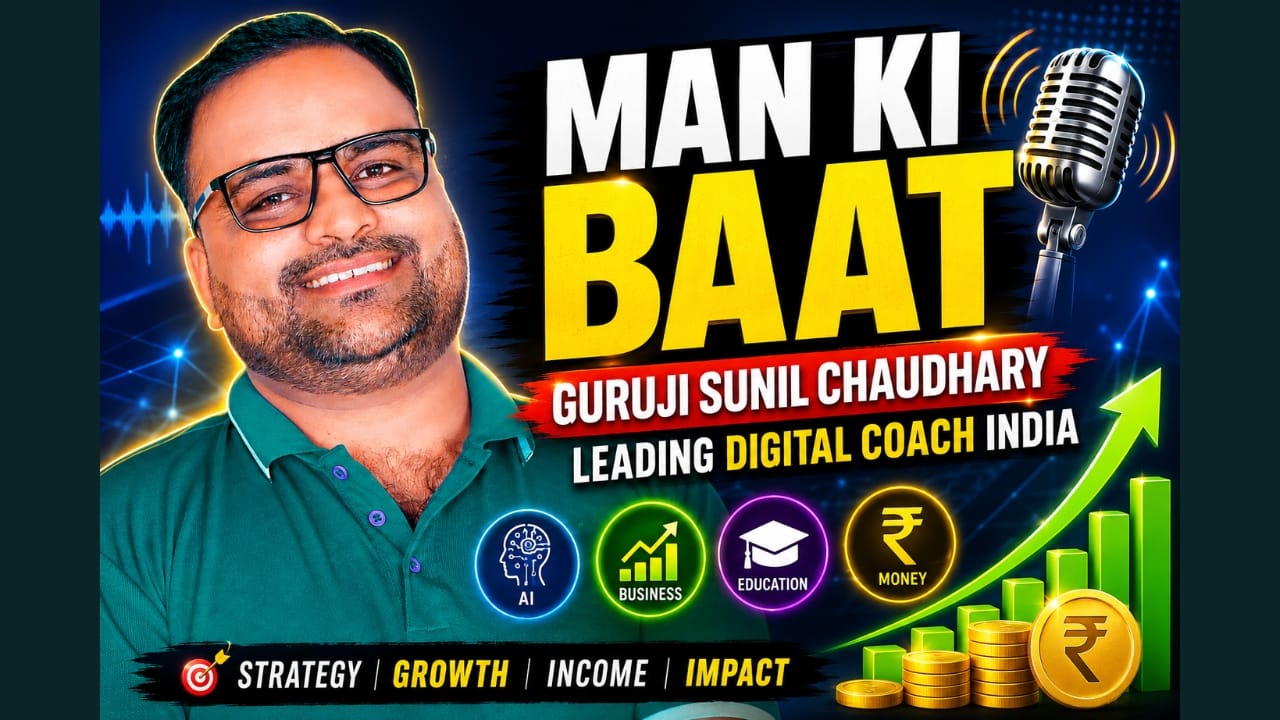

Hey, I am Sunil Chaudhary
If you're an expert, coach, trainer, or consultant who wants to build a profitable Digital Coaching Business, you're in the right place.
I believe people don't need more information; they need implementation.
That's why I've dedicated my work to helping knowledge professionals turn their expertise into a real business with proven systems, automation, and ongoing support.
My mission is simple: help you stop collecting courses, start implementing, and build a Digital Coaching Business that creates income, impact, and freedom. If you're ready to move from ideas to action and from learning to implementation, I'm here to guide you every step of the way.
Let's build your Digital Coaching Business together.


Join Digital Coach Newsletter
Live Digital Coach Funnel Challenge - Book Your Seat Now

Hi I'm Sunil Chaudhary, India's Digital Coach Business Implementation Mentor helping experts, coaches, trainers, and consultants build profitable digital coaching businesses with ongoing support.
WhatsApp +919759999231